Photo by Patricia J. Lovelace © All rights reserved

This week, the SEC published a series of new Compliance and Disclosure Interpretations (“CDIs”) related to the newly revised Regulation A, which became effective on June 19, 2015. While many of the new CDIs addressed procedural and interpretational issues under the new rules, there was an important development that could make Regulation A that much more useful for companies.

The positive news comes in the form of the SEC staff’s response to Question 182.07 which asks whether issuers would be able to use Regulation A in connection with merger or acquisition transactions that meet the criteria for Regulation A in lieu of registering the offering on an S-4 registration statement. Based on the SEC’s final adopting release, it did not appear that Regulation A would be available for use in these types of business combination transactions. However, the interpretation published yesterday clarifies that issuers may, in fact, use Regulation A in connection with mergers and acquisitions. The one exception is that Regulation A would not be available for business acquisition shelf transactions that are conducted on a delayed basis.

This is a very positive development for issuers that want to issue equity in connection with acquisitions of other companies, but do not wish to become a public reporting company under the Exchange Act. Previously, these issuers had very few
Continue Reading More Positive Regulation A News

Reg A+ is now effective!
Photo by Lisandro M. Enrique © 2015 All rights reserved

Today is June 19th.  It is an exciting day for companies that need to raise capital because Reg A+ finally goes into effect.

As a reminder, Reg A+ is a nickname for SEC Regulation A, as amended by the SEC.  Reg

Doom over crowdfunding?The first enforcement action involving a crowdfunding project was recently brought by the Federal Trade Commission. It involved the development of a board game which did not go well despite a successful crowdfunding campaign. This matter is interesting and instructive not only because it is the first such case, but also because it highlights some of the significant risks inherent in the crowdfunding process. The FTC’s official press release on this matter contains a good summary of the relevant events.

According to the FTC complaint, Erik Chevalier discovered an idea for a board game called The Doom that Came to Atlantic City! This game was designed to be a dark fantasy take on the traditional Monopoly board game. The game had originally been developed by two designers, but Chevalier planned to take their concept and produce and distribute a finished game. To raise money for this venture, Chevalier turned to Kickstarter, probably the best known crowdfunding platform. According to the FTC complaint, Chevalier represented to investors that the funds raised would primarily be used for the development, production, completion, and distribution of this game, and that participants would receive certain rewards, such as copies of the final game and action figures, in return for their participation in this campaign.

This crowdfunding campaign was very successful. Chevalier’s original goal was to raise $35,000, but this campaign raised more than $122,000 for the development of this game. Unfortunately, things went bad as the game development process encountered delays.

According to the FTC complaint,
Continue Reading First crowdfunding fraud enforcement action

SAFE and KISSEarly stage and startup companies often face difficulty in obtaining initial financing.  These companies normally do not have access to traditional venture capital, angel, or bank financing.  Even when a startup finds an investor, the company may not have the time or the funds to pursue the long and complicated negotiation and documentation process required for a convertible debt or preferred stock investment.

Y Combinator (a Silicon Valley technology accelerator) developed a possible solution for this situation:  the SAFE (Simple Agreement for Future Equity). This is a short document that contains the basic terms of an investment in an early stage company. Y Combinator’s goal was to create a standard set of terms and conditions that the investor and the startup can agree upon without protracted negotiations so that the startup can obtain its initial funding relatively quickly and cheaply. Y Combinator offers both a summary of SAFE concepts and sample SAFE documents on its site.  Y Combinator first proposed this instrument in December 2013, but it is just now beginning to be used outside of Silicon Valley.

While the SAFE has appeared in a number of forms, the basic concept is that the investor provides funding to the company in exchange for the right to receive equity upon some future event.  The standard SAFE contains no term or repayment date, and no interest accrues.  The investor gets the right to receive the company’s equity when a future event occurs (normally a future equity financing). There is no need to spend time or money negotiating the company’s valuation, the terms of the conversion to equity or any similar items (which can often be tough and protracted negotiation items) – all of those decisions can be deferred into the future. The investor will receive shares in the subsequent offering, often at a discount to the price that other investors pay in that offering. The parties can also negotiate a cap on the valuation used in connection with the SAFE, and this may provide additional protection to the investor.

The beauty of the SAFE concept (from the company’s standpoint) is that it
Continue Reading SAFEs and KISSes – Alternative investment vehicles can help early stage companies get financed

Marketplace lending surely had its day in the sun in 2014.  Peer-to-peer lending, which now goes by the term marketplace lending, took a big step forward last year.  We saw the IPO of Lending Club rocket in its first day of trading on December 11, 2014 by first pricing above the range at $15 per share and then touching a high mark of 67% that day. Lending Club has been the leader in this field and its IPO highlighted the importance and the emergence of this new lending alternative. Despite this surge, however, not everyone attended the party in 2014. Noticeably, the SEC still has not finalized its crowdfunding rules, which are an important next step for the marketplace lending industry.

So what exactly is marketplace lending? Put simply, it is an Internet based lending market that is created by connecting borrowers with lenders or investors.  There are various companies with different approaches to the concept.  In Lending Club’s case, potential borrowers fill out online loan applications.  The company (and its bank behind the scenes) then uses online data and technology to evaluate the credit risks, set interest rates and make loans.  On the other side of the equation, Investors are offered notes for investment that correspond to portions of the loans and can earn monthly returns on their notes that are backed by borrower payments.  As a result, marketplace lending effectively offers secondary market trading for loans.

On the positive side, marketplace lending can be good for borrowers because the lower cost structure of an online platform can be passed along to borrowers in the form of lower interest rates.  The use of the Internet and online credit resources can also speed up the credit approval process so that borrowers can get funds faster.  In addition, some borrowers may get access to loans that they could not get from traditional banks.  In other words, the marketplace could help individuals with lower credit scores or negative credit histories find loans.  Thus, despite its critics, marketplace lending can help serve a niche that has historically been underserved by the banking industry.

Marketplace lending, however, at least when it comes to Lending Club and those like it, still has a bank at its core. So some borrowers will still not be able to get loans through this marketplace model.  Also, the investors are buying registered securities with interests in the loans made in the marketplace.  Lending Club turned to registering their notes with the SEC when
Continue Reading Marketplace lending: A hot new industry looking for crowdfunding

BSA requires broker-dealers to know who you are
Photo by St. Murse

As we blogged about in May, the Bank Secrecy Act (“BSA”), which requires financial institutions in the United States to assist U.S. government agencies to detect and prevent money laundering, applies to entities that we may not traditionally think of as “financial institutions,” including securities broker or dealers. Compliance with the BSA is no easy task. And if a recent notice of new proposed rule by the U.S. Treasury’s Financial Crimes Enforcement Network (also known as FinCEN) becomes law, it’s not about to get any easier.

FinCEN’s stated intent with the proposed rule is to clarify and strengthen customer due diligence requirements for banks, brokers or dealers in securities, mutual funds and futures commission merchants and introducing brokers in commodities. Under current regulations, each of these institutions must establish, document and maintain a Customer Identification Program (or “CIP”) appropriate for its size and business that meets certain minimum requirements, including, among others, the adoption of certain identity verification procedures, and the collection of certain customer information and the maintenance of certain records. The proposed rule adds two (2) new elements to the CIP requirements.

First, the proposed rule
Continue Reading No more secret identities: Broker-dealers may soon be required to identify beneficial owners of legal entity customers

Photo by JMR_Photography

On September 19, Chinese e-commerce giant Alibaba completed the initial public offering of its stock. The underwriters for the offering subsequently exercised their option to buy additional shares, making this the largest IPO in history at $25 billion. The stock’s price immediately jumped by a huge amount, finishing its first day of trading at $93.89, a 38% increase over its $68.00 IPO price. The stock has since lost some ground, closing at $87.17 on Tuesday.

What does this massive IPO mean for U.S. technology companies? I see four possible areas of impact:

  1. U.S. technology companies may delay their IPOs until they see how the Alibaba stock performs. This could be a short delay if the stock price holds up or does well. Right now U.S. technology companies Hubspot, Lendingclub.com, GoDaddy.com and Box, among others, are expected to conduct IPOs this fall.
  2. If the substantial demand for Alibaba stock holds up, fund managers may reduce their
    Continue Reading Alibaba’s record IPO – How will it affect U.S. technology companies?
Waiting for the results of the JOBS Act?
Photo by Gueorgui Tcherednitchenko

President Obama signed the JOBS Act into law on April 5, 2012 amid much fanfare and optimism. Small and medium sized fast-growing technology companies and their executives were especially sanguine about this new act as it appeared that it would provide access to much-needed additional expansion capital. These companies were still reeling from the recession and the substantial reduction in available venture capital financing, and they saw the JOBS Act as a potentially positive event. A little more than two years later, has this initial optimism proved to be warranted? Let’s take a look at some of the provisions of the Act.

A new regulatory structure for crowdfunding was initially the most anticipated provision of the JOBS Act. I never believed that crowdfunding would be as beneficial as some people did, but I hoped that it could provide some additional access to capital for smaller companies which were starved for funds. Unfortunately we are still waiting for the SEC’s final crowdfunding regulations. The SEC appears to be caught between two complaining factions here – one which thinks the proposed rules are too restrictive and won’t work, and one which thinks
Continue Reading The JOBS Act – Any results yet?

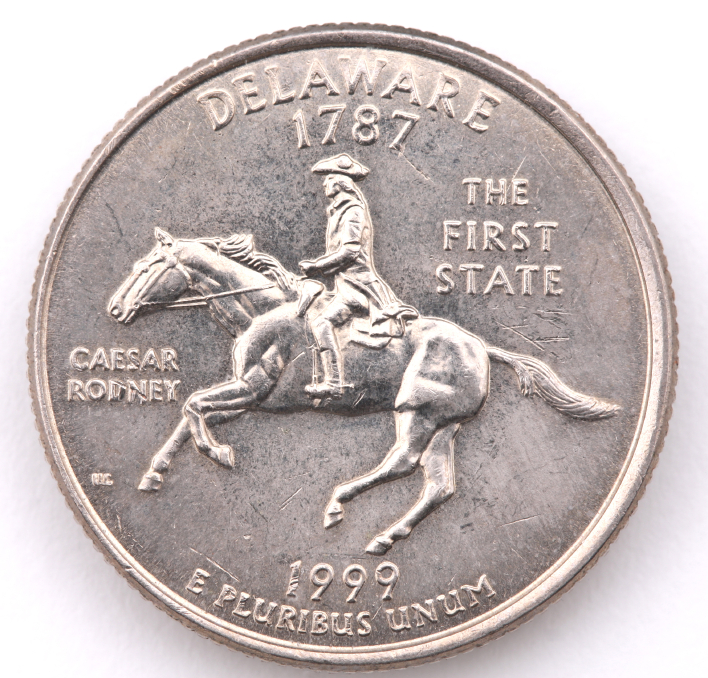
Should you incorporate in Delaware or Florida?There is an attraction for companies to incorporate in Delaware, likely due to the abundance of well-known publicly traded corporations that have chosen to incorporate there. However, it is not necessarily true that the Delaware General Corporation Law (“DGCL”) is better than corporate laws of other states; it is just more developed due to the abundance of case law interpreting it. This usually provides for greater certainty, which is often looked upon favorably by not only directors and management, but investors as well. On the other hand, it is generally more expensive to incorporate and maintain a Delaware corporation. Unless your company has a physical presence in Delaware, you’ll need to pay for a registered agent who is physically located in the state and who can accept service of process on behalf of your company. Delaware also imposes a franchise tax based on a corporation’s capitalization, which is generally higher than similar fees and taxes imposed by other states (for example, Florida’s annual report fee, the only corporate fee that is required to be paid to the state each year to maintain corporate status, is only $150). 

Thus, while there may be good reasons for incorporating or reincorporating in Delaware (e.g., because a private equity investor requires it as a condition for investment), the costs of using a Delaware corporation are probably not justified
Continue Reading Delaware vs Florida: Where should you incorporate?